

If your organization is using CredSpark+, you can pass the Degreed Pathway name to CredSpark and view it in your interaction data. Below are the steps to enable this feature
Note: If you are already using the Display Recognitions on Degreed Learner Profiles feature, you will need to create a new API key to use this feature as well. We will cover this in the steps below.
Requirements
- Admin access to your organization’s CredSpark account.
If you are not an Admin, please contact your CredSpark account manager. - Access to API keys within your Degreed account.
Step-by-Step Setup
1. Generate a Degreed API Key
Log in to your Degreed platform and follow these steps:
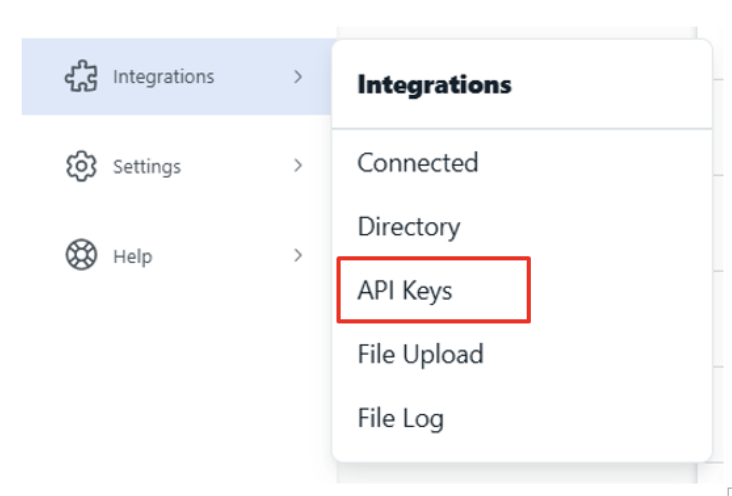
- Go to Integrations → API Keys
- Create a new API key
Make sure the key has "Pathways" access with Read or Write permissions
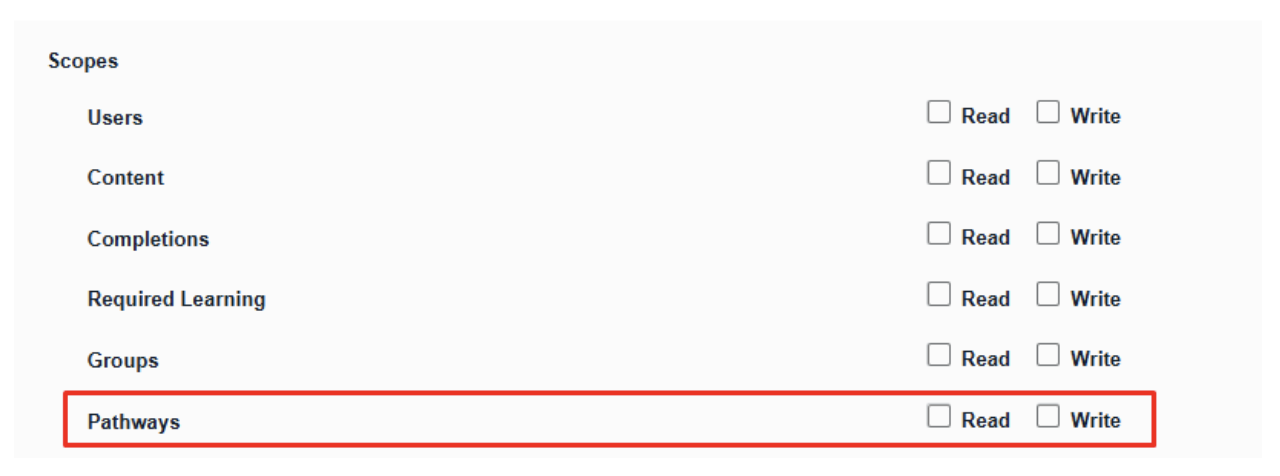
Once created, copy the following fields:
Client ID
Client Secret
IMPORTANT NOTE:
Already using the Display Recognitions on Degreed Learner Profiles feature?
Degreed API keys can't be edited after they're created. To run both features, create one new key with both the Pathways and User Badge scopes enabled, then update your CredSpark integration with that new key's Client ID and Client Secret (Step 2). The new key replaces your old Badges-only key, which you can delete once the connection is updated.
2. Connect Degreed to CredSpark
Next, go to your CredSpark Admin Settings:
Click the Integrations tab
Find the Degreed integration card
Click Connect (or Edit, if you're already connected)
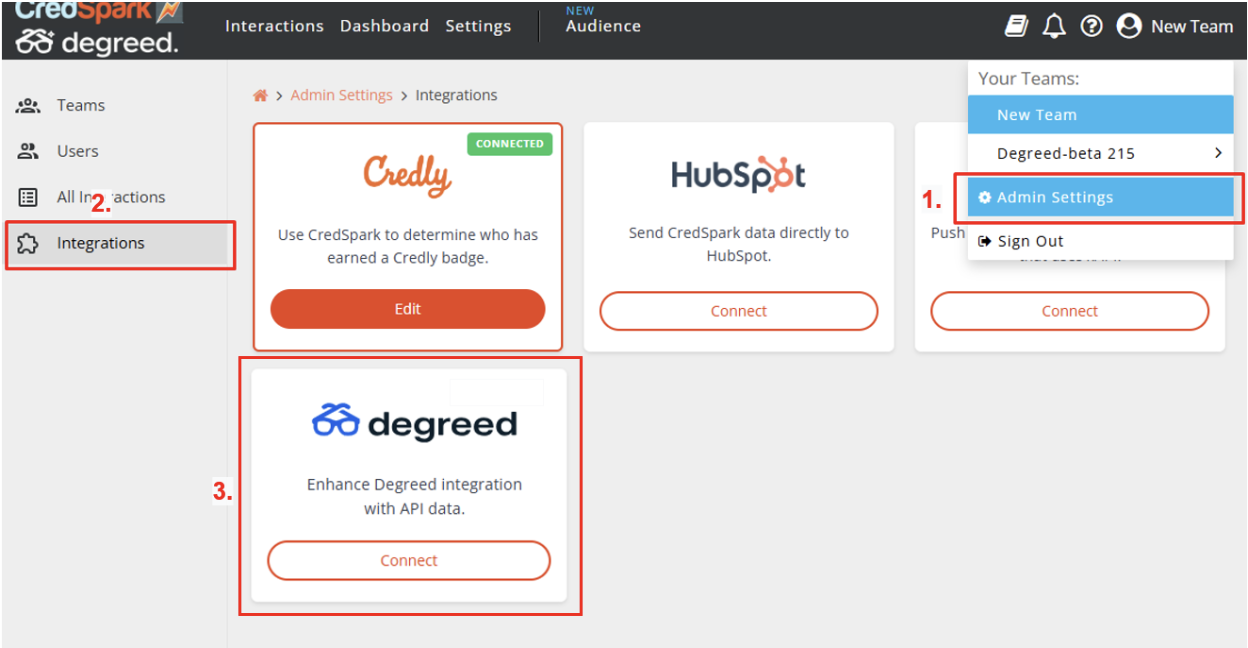
- A modal will appear. Paste in the Client ID and Client Secret you copied from Degreed.
- Under Enabled features, check Pathways (import pathway names on completion)
- Click Save to complete the connection.
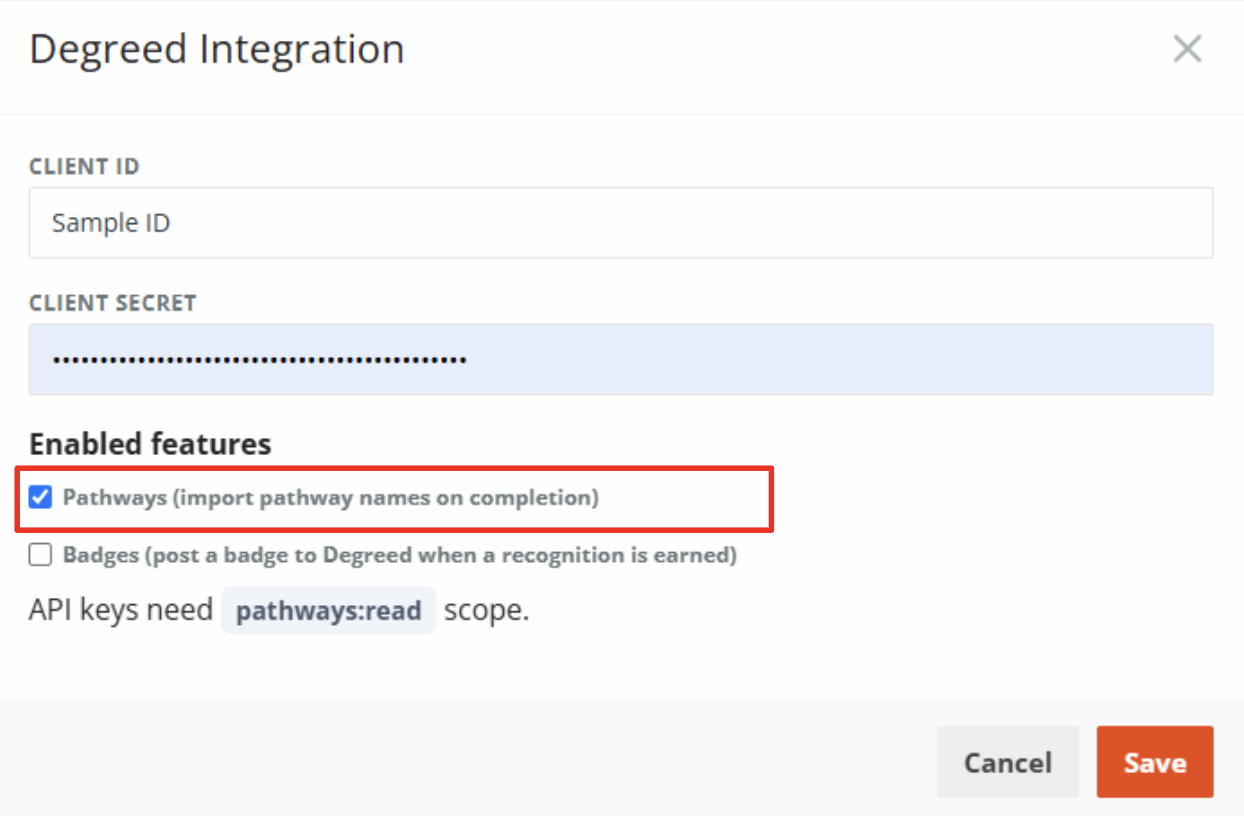
Once saved, the integration will be activated. CredSpark will begin automatically capturing the Pathway name when users interact with your content via Degreed.
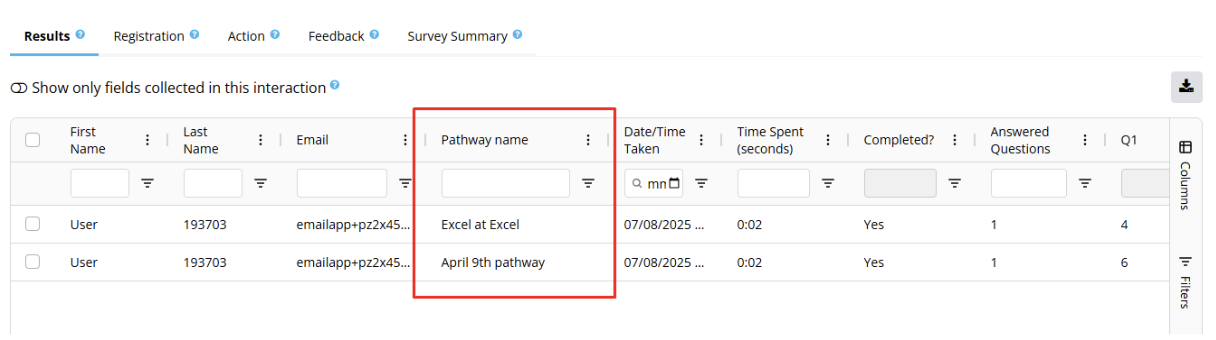
You’ll now see a new column titled “Pathway Name” in your interaction data, showing which Degreed Pathway each response came from.
Important Considerations
This feature isn’t compatible with the "Make responses anonymous" setting. If you enable it, we won’t be able to pass the pathway ID.
If you use the same interaction in multiple Degreed Pathways, and a user completes it more than once, the interaction may still appear as verified even if they haven't completed it again in that specific Pathway.
We recommend enabling “Start from Scratch” for those interactions. This ensures that even if an interaction appears as “Verified” in Degreed, users can still start it fresh and submit new responses.
Here’s what the user experience will look like if they begin a new Pathway but have previously completed the interaction elsewhere:
https://www.loom.com/share/04d9841592cb47b288521396b80917f4
Disconnecting Integration
If you ever need to disconnect the integration, go to the Integrations page in your CredSpark account, click the “Edit” button next to Degreed, and select 'Disconnect.' This will stop CredSpark from syncing Degreed Pathway Names, but it won’t affect any other settings or data.
Using Pathway in Display Logic
In some cases, you may want to show specific questions only to users who access an interaction from a particular Degreed pathway. You can do this using display logic.
To get started, open the Degreed pathway where you want certain questions to appear.
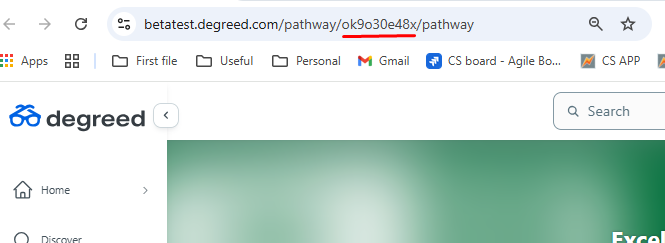
Each Degreed pathway has a unique identification code in its URL. Copy this code, you will use it to configure the display logic.
Next, open the interaction in CredSpark and select the question you want to tailor. Navigate to Display Logic, choose Source, and paste the pathway code into the field.
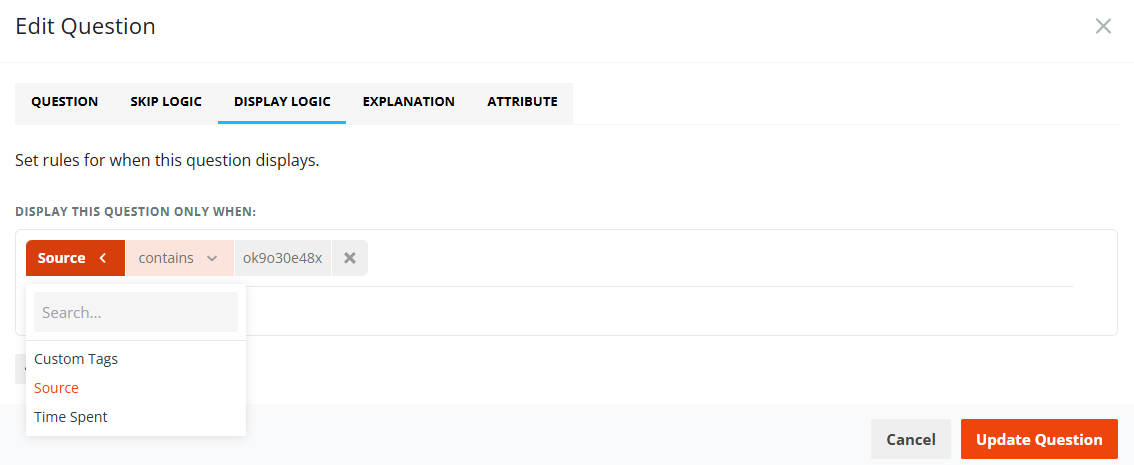
Once configured, this question will only appear for users who launch the interaction from that specific pathway.
Important: If the same survey is used across multiple pathways, make sure Always Start Interaction from Scratch is enabled.